
Ready to Get Started?
Write quantum programs with the free QDK and run them on partner hardware.
Overview
Azure Quantum is Microsoft Azure's cloud quantum computing service. From an Azure Quantum workspace you can run programs on hardware from IonQ, Pasqal, Quantinuum and Rigetti, simulate algorithms, and estimate the resources a program would need on future fault-tolerant machines.
Development happens in the Microsoft Quantum Development Kit (QDK), which is free and open source and installs as a VS Code extension or a Python package. It supports Microsoft's Q# language as well as Qiskit, Cirq and OpenQASM. You don't need an Azure account to use the QDK, only to submit jobs to hardware.
Each hardware provider sets its own prices on Azure Quantum, from per-gate-shot billing (IonQ) to execution-time billing (Rigetti, Pasqal) and large monthly subscriptions (Quantinuum).
Key Features
Multi-provider hardware
Trapped-ion systems from IonQ and Quantinuum, neutral-atom processors from Pasqal and superconducting processors from Rigetti.
Quantum Development Kit (QDK)
Free, open-source SDK to write, debug and visualize quantum programs and submit jobs, in VS Code or Python.
Q# language
Microsoft's open-source, hardware-agnostic quantum programming language, alongside support for Qiskit, Cirq and OpenQASM.
Resource estimator
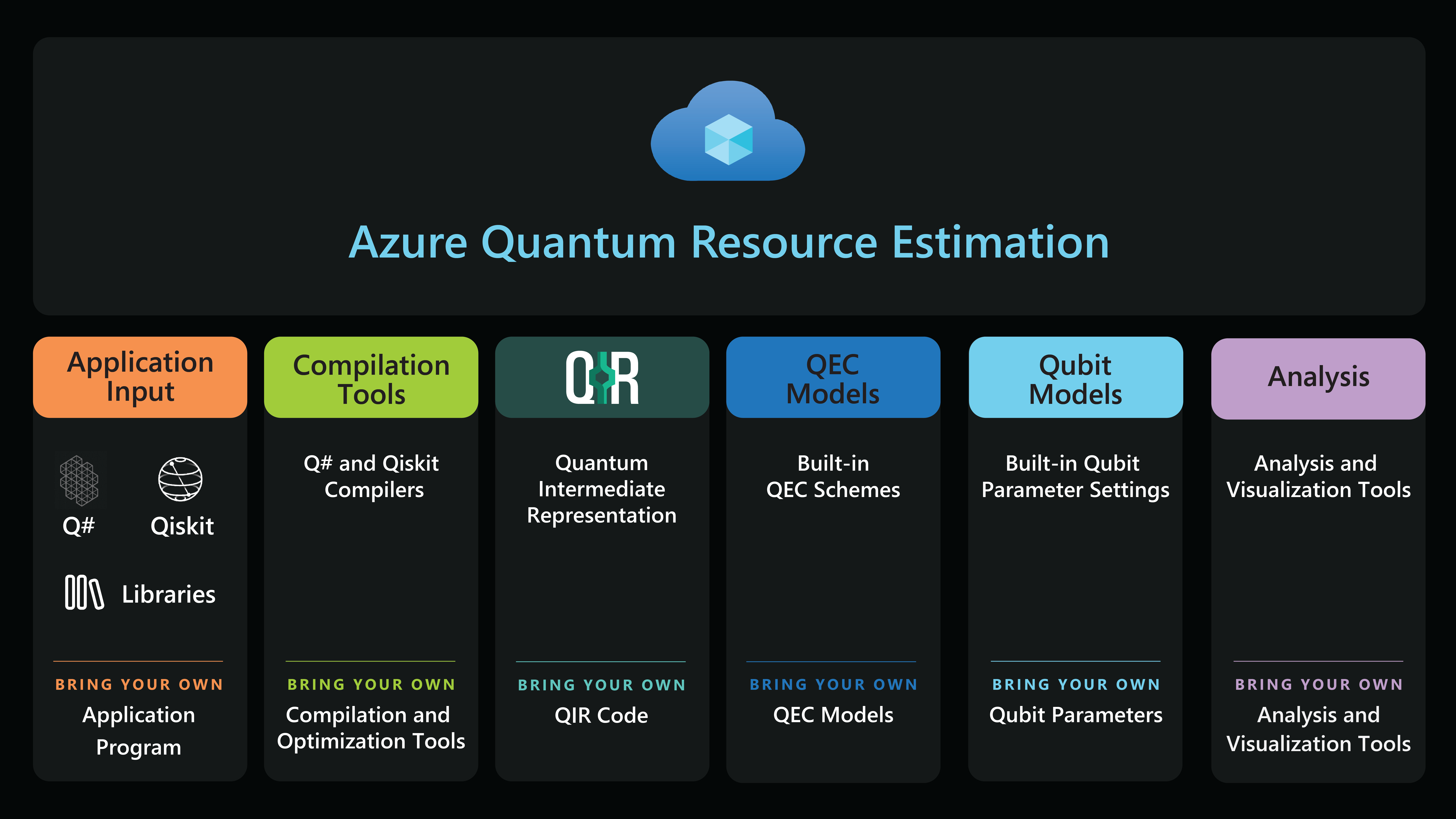
Estimates the physical qubits and runtime an algorithm needs, using fault-tolerant protocols and QEC models you choose or define.
Hybrid quantum computing
Combine classical and quantum steps in the same program on supported hardware.
Azure portal workspace
Create a workspace, submit jobs, monitor them and manage access through the Azure portal.
Pros & Cons
Advantages
- Covers trapped-ion, neutral-atom and superconducting hardware in one service
- QDK is free, open source and usable without an Azure account
- Supports Qiskit, Cirq and OpenQASM, not only Q#
- Resource estimator helps plan algorithms for future fault-tolerant machines
- IonQ's simulator and Rigetti's QVM simulator are free
- Hardware costs land on your existing Azure subscription
Disadvantages
- Every provider uses a different pricing model, which makes costs hard to compare
- High per-program minimums: $97.50 on IonQ Aria 1 and $168.195 on IonQ Forte with error mitigation on
- Quantinuum subscriptions start at $125,000 per month; pay-as-you-go goes through Quantinuum sales
- Running on hardware requires an Azure subscription and a quantum workspace
- Microsoft notes that its pricing page may lag behind provider changes
Pricing
Azure Quantum itself is accessed through an Azure subscription; hardware providers set their own prices, plus Azure infrastructure (storage) costs:
IonQ
Pay-as-you-go per gate-shot. Aria 1: $0.000220 per 1-qubit gate-shot, $0.000975 per 2-qubit gate-shot, minimum $97.50 per program with error mitigation ($12.4166 without). Forte 1 and Forte Enterprise 1: minimum $168.195 ($25.7899 without). Aria-Forte subscription: $25,000/month. Simulator free.
Quantinuum
Standard plan $125,000/month (10k HQCs on System Model H2); Premium plan $175,000/month (17k HQCs). Pay-as-you-go per HQC through Quantinuum sales.
Pasqal
Pay-as-you-go: EUR 3,000 per QPU-hour and EUR 15 per emulator-hour.
Rigetti
Pay-as-you-go: $0.02 per 10 ms of execution time on Cepheus-1-108Q, with no per-shot or per-gate charge. QVM simulator free.
Prices from Microsoft Learn's Azure Quantum provider pricing page (updated April 2026); verify current prices in your workspace. New Azure accounts get a general $200 credit for 30 days.
Best Use Cases
Azure Quantum Excels For:
- Learning and teaching quantum programming with Q# and the QDK
- Estimating resources for fault-tolerant algorithms, such as cryptography studies
- Organizations already standardized on Azure
- Teams that need Quantinuum H2 or Pasqal neutral-atom hardware
- Chemistry and materials research combining Azure HPC with quantum tools
May Not Be Ideal For:
- Low-budget hardware experiments, given the per-program minimums
- Teams outside the Azure ecosystem
- Quantum annealing workloads, since D-Wave is not a provider
Comparison
Azure Quantum vs Competitors
Where Azure Quantum stands out
- Quantinuum and Pasqal hardware, which Amazon Braket does not list
- Resource estimator for future fault-tolerant machines
- Q# plus support for Qiskit, Cirq and OpenQASM in one free SDK
Where alternatives fit better
- Amazon Braket: flat per-task and per-shot pricing, with IQM, AQT and QuEra devices
- IBM Quantum: 10 free minutes per month on IBM's 100+ qubit processors
- D-Wave Leap: annealing hardware for optimization problems
Screenshots & Interface
Explore Azure Quantum's interface:
Frequently Asked Questions
Do I need an Azure account?
Not to write and simulate programs: the QDK works without one. To submit jobs to quantum hardware you need an Azure account and an Azure Quantum workspace.
Which quantum hardware is available?
IonQ (trapped ion, up to 36 fully connected qubits), Pasqal (neutral atom), Quantinuum (trapped ion, System Model H2) and Rigetti (superconducting, Cepheus-1-108Q).
How much does it cost?
It depends on the provider. IonQ bills per gate-shot with per-program minimums, Rigetti $0.02 per 10 ms of execution, Pasqal EUR 3,000 per QPU-hour, and Quantinuum offers subscriptions from $125,000 per month. Azure storage costs are added.
Which programming languages are supported?
The QDK supports Q#, Qiskit, Cirq and OpenQASM, from VS Code or Python.
What is the resource estimator?
A tool that computes the physical resources (qubits, runtime) an algorithm would need on a given hardware architecture and error-correction code, to plan for future scaled machines.
Are there free credits?
Microsoft's pricing page mentions only the general Azure offer: a $200 credit for 30 days on a new account. Students can get a free Azure account. IonQ's simulator and Rigetti's QVM are free.
Final Verdict
Azure Quantum is a strong choice for Azure users and for anyone who wants Quantinuum or Pasqal hardware, with a free, capable QDK and resource estimator. Hardware runs are expensive and priced differently per provider, so check each provider's terms before submitting jobs.