
Ready to Get Started?
Ask a complex question and get a cited research report in a few minutes.
Overview
Deep Research is Perplexity's mode for in-depth questions. Launched on February 14, 2025, it performs dozens of searches, reads hundreds of sources and reasons through the material to produce a full report on its own.
Most tasks finish in under three minutes; Perplexity quotes 2 to 4 minutes for work that would take a human expert many hours. The finished report can be exported as a PDF or document, or turned into a shareable Perplexity Page.
Unlike academic tools that search a paper database, Perplexity searches the web broadly. That makes it useful for market, technical and general research, but sources need checking. Perplexity was founded in August 2022 by Aravind Srinivas, Denis Yarats, Johnny Ho and Andy Konwinski.
Key Features
Deep Research
Runs dozens of searches, reads hundreds of sources and writes a structured report.
Answers with citations
Every search answer links to its sources, on every plan.
Model selection
Pro and Max subscribers can choose among top AI models.
Export and Pages
Export reports to PDF or a document, or publish them as a Perplexity Page.
Pros & Cons
Advantages
- Deep Research is available on the free plan, with daily limits
- Reports are ready in a few minutes
- Sources are cited throughout
- Export to PDF, documents or a shareable Page
- Covers the whole web, not just academic papers
Disadvantages
- Not a scholarly database: web sources vary in quality and need checking
- Free usage is limited
- Max costs $167/month billed annually
- The pricing page does not list compliance certifications
- At launch, Perplexity reported 21.1% on Humanity's Last Exam, so hard questions still trip it up
Pricing
Perplexity's individual plans, as listed on its pricing page:
Free ($0)
Search with citations, basic models and limited usage, including limited Deep Research.
Pro ($17/mo, billed annually)
Deep Research, top AI models with model selection, document and app creation, higher limits.
Max ($167/mo, billed annually)
Highest usage limits, frontier models, expert-level research and priority access to new features.
Enterprise plans are listed separately on Perplexity's enterprise pricing page.
Best Use Cases
Perplexity Research Excels For:
- Market, product and technical research that draws on web sources
- Getting a structured first draft of a research brief quickly
- Professionals who need sources cited inline
- Comparing many sources on a fast-moving topic
May Not Be Ideal For:
- Systematic reviews that must be limited to peer-reviewed literature
- Work where every source must come from a curated academic database
- Heavy daily use on the free plan
Comparison
Perplexity Research vs Competitors
vs Elicit
Elicit searches 138M+ academic papers and supports systematic review screening; Perplexity searches the open web.
vs Consensus
Consensus answers only from scientific papers and adds the Consensus Meter for yes/no questions.
vs Undermind
Undermind runs deep searches of the scientific literature and follows citation trails; Pro is $16/month billed annually.
See all tools in this category on our research tools page.
Screenshots & Interface
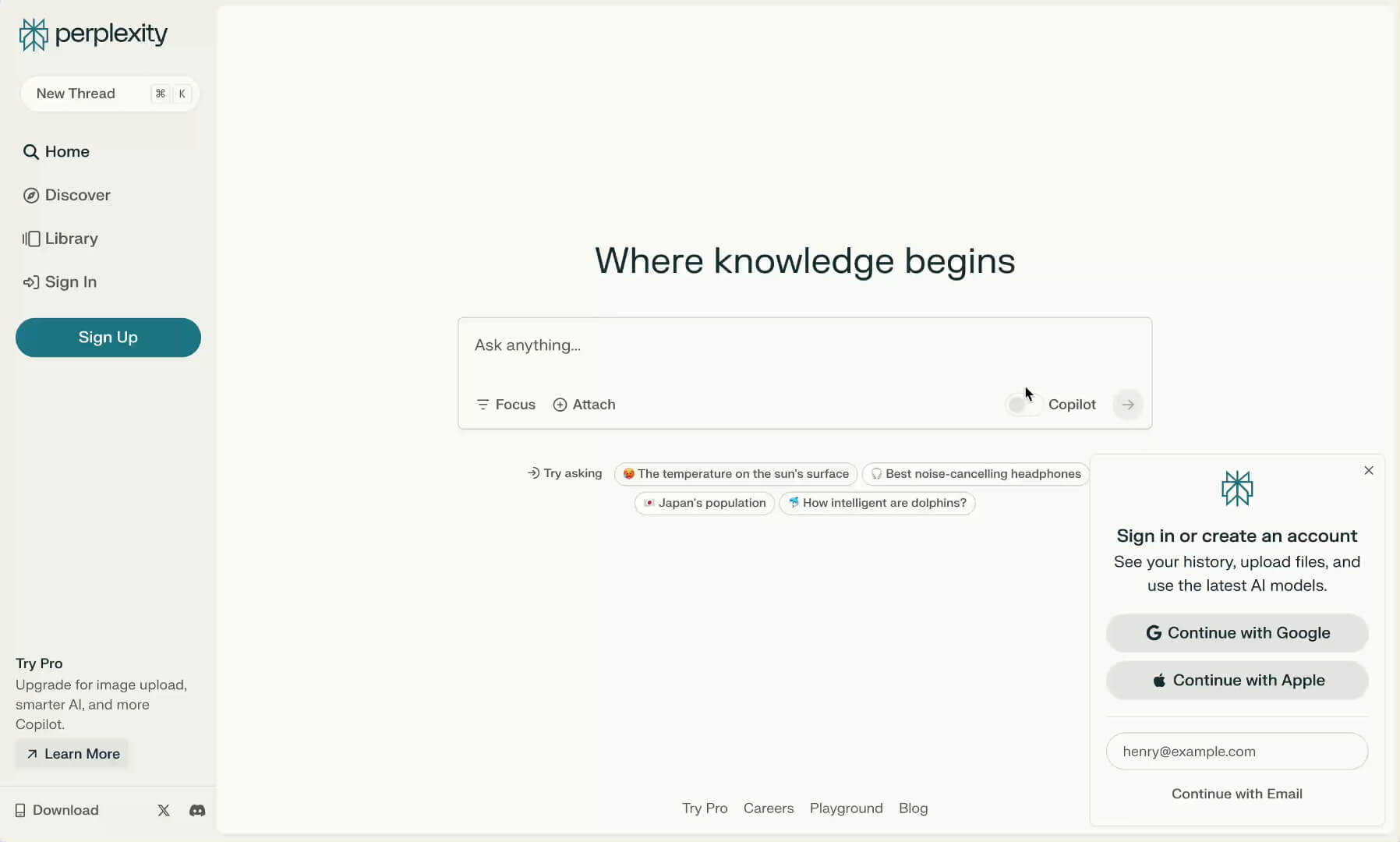
Explore Perplexity Research's interface:
Frequently Asked Questions
Is Perplexity Deep Research free?
Yes, with limits. Non-subscribers get a limited number of Deep Research answers per day; Pro subscribers get a much higher volume.
How long does a Deep Research report take?
Perplexity says most tasks finish in under three minutes, typically 2 to 4 minutes.
Can I export the report?
Yes, as a PDF or document, or as a shareable Perplexity Page.
How much does Perplexity Pro cost?
$17/month billed annually, according to Perplexity's pricing page. Max costs $167/month billed annually.
Is it a good tool for academic literature reviews?
It helps for a first overview, but it searches the web broadly. For peer-reviewed-only work, tools like Elicit or Consensus are a better fit.
Final Verdict
Perplexity Deep Research turns a complex question into a cited report in minutes, and you can try it for free. It works best for broad web research and first drafts. For peer-reviewed-only work, check every source or use an academic tool alongside it.