Try It Now
Overview
Butterfly iQ is revolutionizing medical imaging with the world's first handheld, whole-body ultrasound device powered by AI. Unlike traditional ultrasound machines that cost tens of thousands of dollars and require dedicated rooms, Butterfly iQ is a pocket-sized probe that connects to your smartphone or tablet, delivering clinical-grade imaging at a fraction of the cost. Since its FDA clearance in 2018, over 100,000 clinicians worldwide have adopted Butterfly iQ for point-of-care diagnostics.
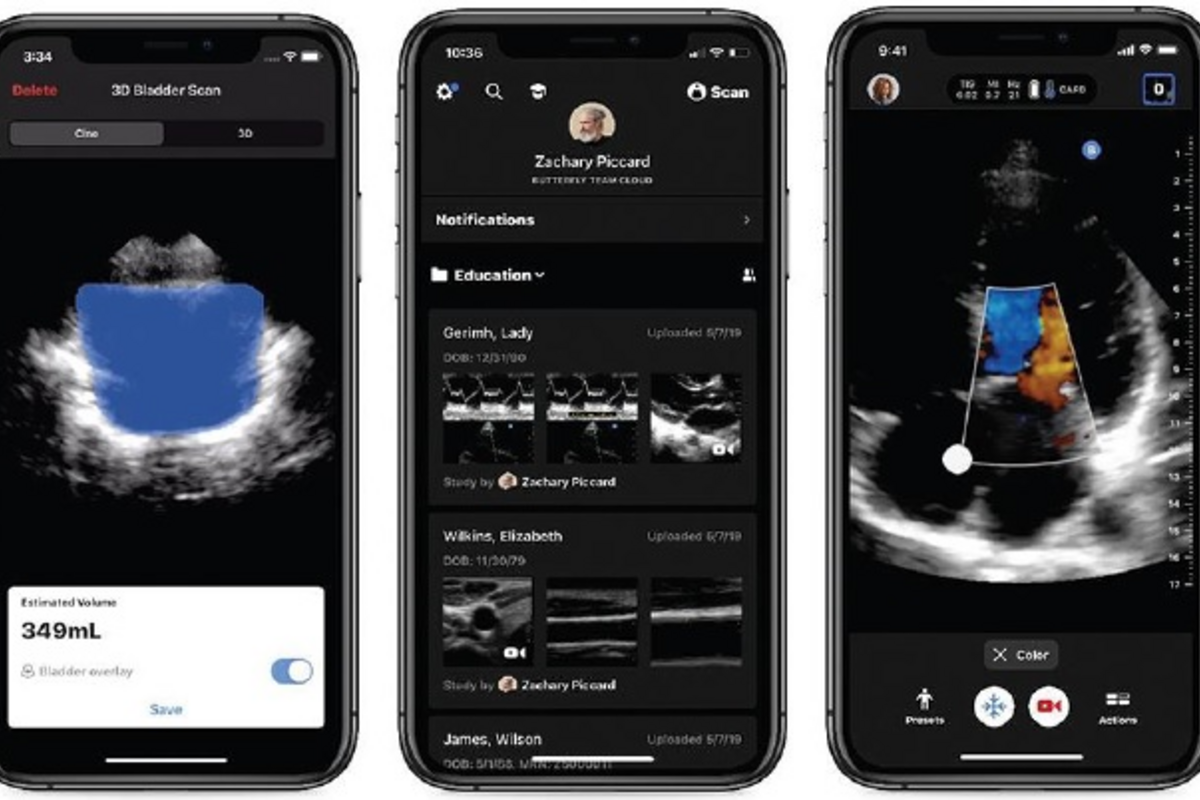
The device uses proprietary semiconductor technology instead of traditional piezoelectric crystals, enabling a single probe to perform all ultrasound examinations from cardiac to musculoskeletal imaging. AI-powered features provide real-time guidance for probe positioning, automated measurements, and image optimization, making ultrasound accessible to healthcare providers regardless of experience level. Cloud integration allows instant sharing with colleagues and specialists for collaborative diagnosis.
Butterfly iQ is transforming healthcare delivery in emergency departments, primary care clinics, rural hospitals, and global health settings where traditional ultrasound machines are impractical or unaffordable. With HIPAA-compliant cloud storage, telemedicine integration, and continuous AI improvements, Butterfly iQ represents the future of democratized medical imaging.
Key Features
Handheld Ultrasound Device
Pocket-sized probe connects to smartphones and tablets for whole-body imaging anywhere. Single probe for all applications from cardiac to OB/GYN.
AI Image Guidance
Real-time AI assistance for probe positioning and image optimization. Auto-detects anatomy and suggests optimal imaging planes for accurate diagnostics.
Automated Measurements
AI-powered automatic measurements for cardiac function, vessel diameter, and anatomical structures. Reduces measurement variability and saves time.
Cloud Storage Platform
HIPAA-compliant cloud storage for unlimited studies. Access images from any device and build a searchable archive of all examinations.
Telemedicine Integration
Instant sharing of live or recorded studies with remote specialists. Enable real-time collaboration and expert consultation from anywhere.
Instant Image Sharing
Share images and videos via secure links or integrate with EHR systems. Export DICOM files for seamless workflow integration.
Built-in Training Modules
Interactive educational content and scanning protocols within the app. Learn ultrasound techniques with step-by-step guidance and practice modes.
FDA Approved Device
FDA 510(k) cleared for 13 clinical applications. Meets rigorous safety and efficacy standards for clinical diagnostic use in healthcare settings.
Pros & Cons
Advantages
- Extremely portable and convenient
- Whole-body imaging with single probe
- AI-assisted image guidance
- Cloud-based storage and sharing
- Significantly lower cost than traditional ultrasound
- Real-time telemedicine capabilities
- Continuous software updates and improvements
- HIPAA-compliant platform
- Excellent for point-of-care diagnostics
- Built-in educational resources
Disadvantages
- Image quality not equal to high-end cart systems
- Subscription model for full features
- Requires smartphone or tablet
- Limited depth penetration in some cases
- Battery life varies with usage
- Learning curve for optimal image acquisition
- Not suitable for all specialized applications
- Dependent on internet for cloud features
Pricing Plans
| Plan | Price | Features | Best For |
|---|---|---|---|
| Butterfly iQ+ | $1,999 | Device purchase, basic imaging modes, local storage | Basic point-of-care imaging |
| iQ+ Monthly | $49/month | Cloud storage, AI features, telemedicine, automated measurements | Individual practitioners |
| iQ+ Annual | $420/year | All monthly features, 3 months free, priority support | Regular users (save 30%) |
| Enterprise | Custom | Volume pricing, EHR integration, admin dashboard, dedicated support | Hospitals and health systems |
Best Use Cases
Butterfly iQ Excels At:
- Point-of-Care Diagnostics: Immediate bedside assessment in emergency departments and ICUs
- Primary Care: FAST exams, cardiac assessments, and procedural guidance in outpatient settings
- Rural Healthcare: Bringing advanced imaging to underserved areas without expensive equipment
- Emergency Medicine: Rapid triage and diagnosis of trauma, cardiac emergencies, and acute conditions
- OB/GYN: Prenatal care and gynecological examinations in clinic settings
- Vascular Access: Guided IV placement and central line insertion with real-time visualization
- Medical Education: Teaching ultrasound skills to students and residents with built-in protocols
- Global Health: Portable imaging for medical missions and resource-limited settings
May Not Be Ideal For:
- High-end cardiology requiring advanced Doppler analysis
- Deep abdominal imaging in large patients
- Specialized applications requiring dedicated transducers
- Settings requiring multiple simultaneous scanning stations
How It Compares
Butterfly iQ vs Traditional Cart Ultrasound
Butterfly iQ offers unprecedented portability and affordability compared to traditional cart-based ultrasound systems costing $20,000-$200,000. While traditional systems provide superior image quality and specialized capabilities, Butterfly iQ's whole-body imaging with a single probe and AI guidance makes ultrasound accessible at the point of care. Traditional systems require dedicated rooms and specialized technologists, while Butterfly iQ can be used by physicians at the bedside. For many clinical applications, Butterfly iQ provides sufficient diagnostic quality at a fraction of the cost and space requirements.
Butterfly iQ vs Lumify (Philips)
Both are smartphone-based ultrasound solutions, but Butterfly iQ uses proprietary semiconductor technology for a single whole-body probe, while Lumify requires multiple transducers for different applications. Butterfly iQ has more advanced AI features and cloud integration, while Lumify leverages Philips' imaging heritage for potentially better raw image quality. Butterfly iQ's subscription model includes continuous AI improvements, whereas Lumify is primarily a device purchase. Butterfly iQ is better for versatile point-of-care use, while Lumify appeals to users wanting traditional ultrasound quality in a portable format.
Final Verdict
Our Recommendation
Butterfly iQ is a game-changing medical device that democratizes ultrasound imaging for healthcare providers across all settings. The combination of exceptional portability, whole-body imaging capabilities, AI-powered guidance, and cloud integration makes it invaluable for point-of-care diagnostics. While it doesn't replace high-end ultrasound systems for specialized applications, it brings clinical-grade imaging to situations where traditional ultrasound is impractical or unavailable. The $1,999 device cost plus $49/month subscription is remarkably affordable compared to traditional systems, making it accessible to individual practitioners, small clinics, and global health organizations. The AI features and built-in training make ultrasound accessible to providers regardless of experience level, expanding diagnostic capabilities in primary care and emergency settings. For emergency medicine physicians, primary care providers, rural healthcare facilities, and medical educators, Butterfly iQ is an essential tool that improves patient care through immediate, informed decision-making. The FDA clearance, HIPAA compliance, and continuous software updates ensure clinical reliability and regulatory compliance. If you need portable, versatile imaging that goes wherever patient care happens, Butterfly iQ is the clear choice in handheld ultrasound technology.
Screenshots & Interface
Explore Butterfly iQ's interface: